The Jaguar F-TYPE: From Four Cylinders to Five Litres of Fury
From its launch in 2013 to the final car leaving Castle Bromwich in 2024, the F-TYPE became one of Jaguar’s most memorable modern sports cars. We look back at its evolution, the special editions that defined its history and the cars that owners continue to enjoy around the world.
There are cars that become memorable because of their performance figures. Others are remembered for their styling, their engineering or the reputation of the badge they wear.
The Jaguar F-TYPE managed to combine all of these things.
When it arrived in 2013, it represented something particularly important for Jaguar. It was the company’s first two-seat sports car in almost 40 years, following the legendary E-Type, and it gave the brand a modern successor to one of the most recognisable names in British motoring history.
With its long bonnet, compact cabin, muscular rear haunches and unmistakable exhaust note, the F-TYPE made an immediate impression. It was a car that looked special standing still and sounded even better when its engine was started.
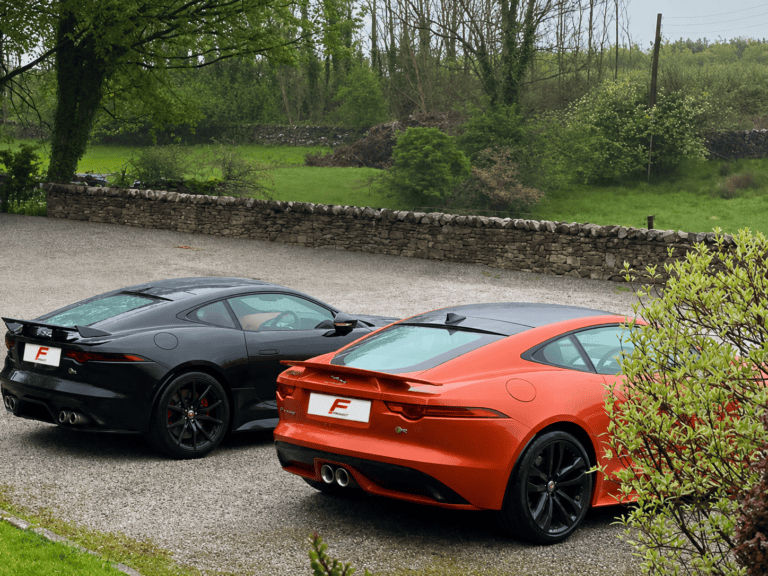
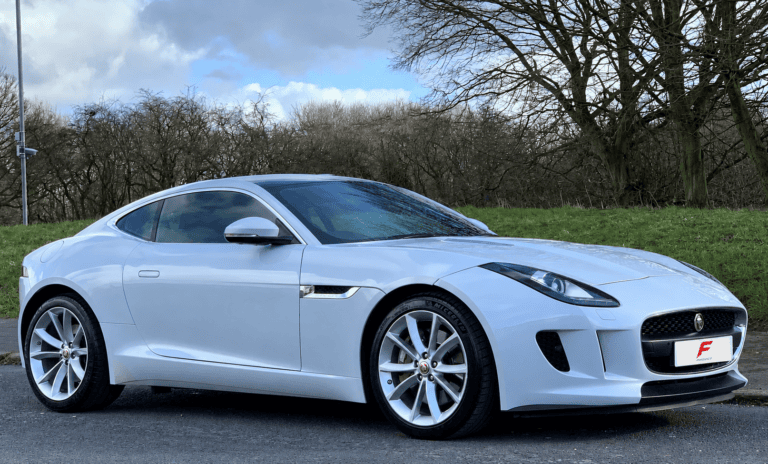
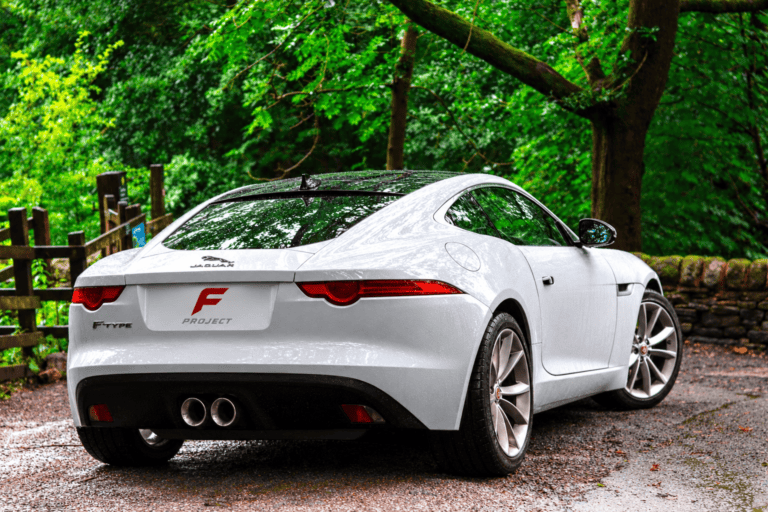
Over the following decade, Jaguar developed the F-TYPE into a surprisingly diverse family of sports cars. From four-cylinder entry-level models and supercharged V6 versions to increasingly powerful V8s, limited-production specials and the extraordinary Project 7, there was an F-TYPE for almost every type of enthusiast.
And then, in 2024, the story came to an end.
But what a story it was.
The Beginning: A New Jaguar Sports Car
The F-TYPE first arrived as a convertible in 2013, with the coupé following in 2014.
Its introduction was significant because Jaguar had not produced a conventional two-seat sports car since the E-Type ceased production in 1974.
The design was clearly influenced by Jaguar’s heritage, but it was never intended to be a retro recreation. Instead, it took the proportions and spirit of a traditional British sports car and interpreted them for a new generation.
The original range was built around supercharged V6 and V8 engines, giving buyers a choice between a more accessible performance car and something considerably more dramatic.
The V6 offered an appealing combination of performance, sound and everyday usability, while the V8 delivered the sort of soundtrack that quickly became one of the F-TYPE’s defining characteristics.
It was also a car that encouraged people to take the long way home.
The F-TYPE was never simply about getting from one place to another. It was about the experience of driving.
The Four-Cylinder F-TYPE: A Different Kind of Performance
As the range developed, Jaguar introduced a smaller 2.0-litre turbocharged Ingenium four-cylinder engine.
For some enthusiasts, this was a controversial move. The F-TYPE had built much of its reputation around the character and soundtrack of its supercharged engines, so the arrival of a four-cylinder version inevitably divided opinion.
However, the smaller engine brought some genuine advantages.
With 300PS available, it still offered meaningful performance, while its lighter front-end helped deliver a different balance to the driving experience.
It also made the F-TYPE more accessible to buyers who wanted the styling, handling and character of the Jaguar sports car without necessarily needing a V6 or V8.
OWNER’S F-TYPE | MIKE
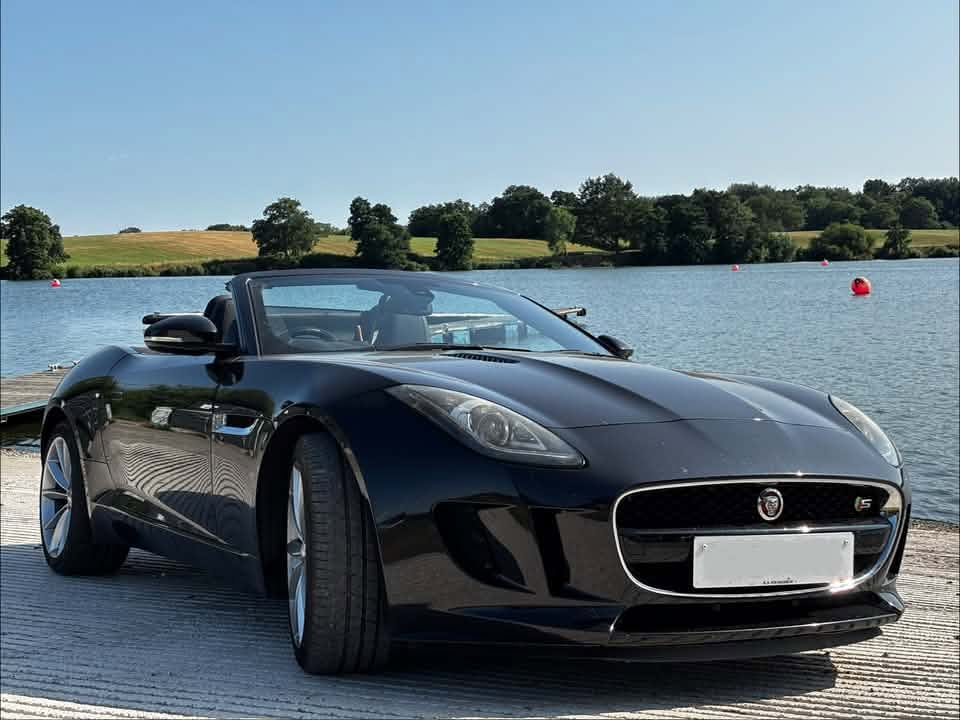
Mike’s black F-TYPE Convertible is a good example of this side of the range.
With its roof down, silver alloy wheels and distinctive rear styling, it demonstrates that the four-cylinder model retained the proportions and presence that made the F-TYPE so appealing in the first place.
The 2.0-litre engine may have represented a different approach to the traditional Jaguar sports car, but it still delivered the essential F-TYPE experience.
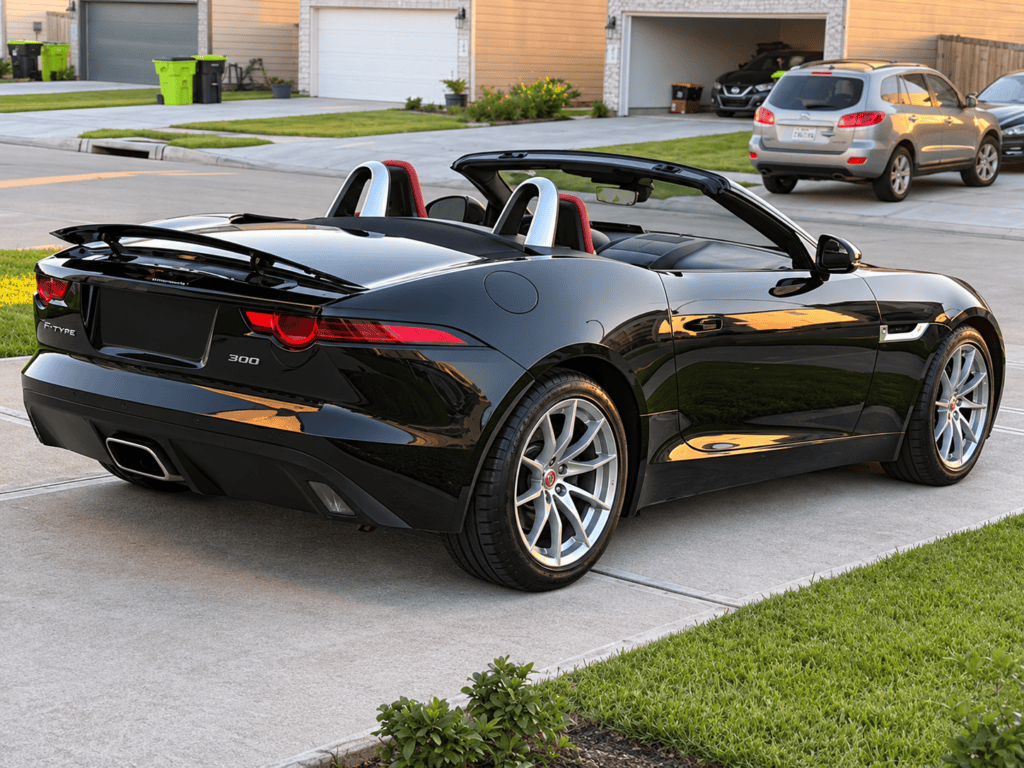
Mike’s four-cylinder F-TYPE Convertible. With 300PS from its 2.0-litre Ingenium engine, it offered a different route into Jaguar’s sports-car family without losing the styling and character of the original.
The Supercharged V6: The Heart of the Range
For many enthusiasts, the supercharged V6 represented the sweet spot in the F-TYPE line-up.
Available in different power outputs during the car’s lifetime, the 3.0-litre V6 combined strong performance with a distinctive soundtrack and an engaging driving experience.
It was powerful enough to feel genuinely special, yet offered a balance that made it particularly attractive for regular use and longer journeys.
The supercharger also gave the engine a character of its own. Rather than relying on turbocharger boost, it delivered immediate response and a distinctive mechanical sound that became part of the F-TYPE’s identity.
The V6 was available in both Coupé and Convertible form, giving buyers the choice between the more focused appearance of the fixed-roof car and the open-air experience of the roadster.
OWNER’S F-TYPE | BRIAN
Brian’s supercharged V6 Convertible illustrates another important part of the F-TYPE story: the enjoyment of taking the car beyond familiar roads.
His photograph, taken in Pontiac, Illinois, places the dark-coloured Jaguar in front of a Route 66 mural.
There could hardly be a more appropriate backdrop for a sports car designed to encourage driving adventures.
The legendary American highway has become synonymous with road trips, and Brian’s photograph captures the touring side of F-TYPE ownership rather than simply concentrating on performance.
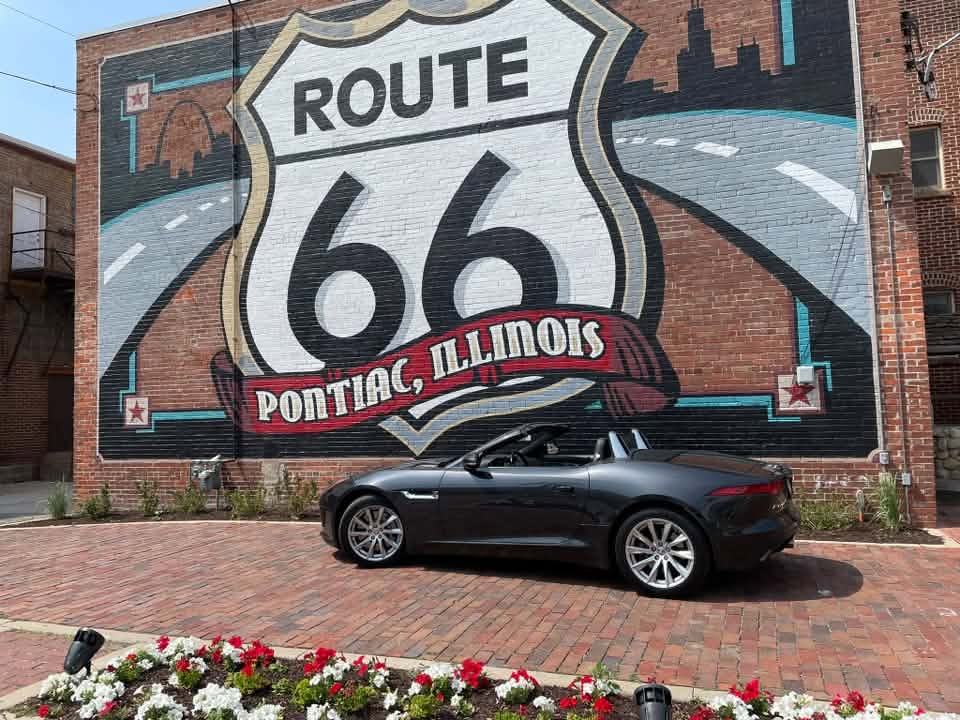
Brian’s supercharged V6 F-TYPE enjoying a stop along the legendary Route 66 in Pontiac, Illinois. The V6 models offered a compelling blend of performance, character and everyday usability.
The 400 SPORT: Something a Little Different
One of the most interesting additions to the F-TYPE range was the 400 SPORT.
Introduced for the 2017 model year, the 400 SPORT was based around the supercharged 3.0-litre V6, producing 400PS.
It was created as a distinctive sporting version of the V6, bringing together a higher power output, carefully chosen styling details and additional driver-focused equipment.
The 400 SPORT received its own visual identity, including distinctive badging, unique interior details and a range of exterior enhancements. It also benefited from a mechanical limited-slip differential, helping to make better use of the available performance.
Available in both Coupé and Convertible forms, it provided an interesting alternative to the more familiar V8 models.
It was not simply a standard V6 with a badge added. The 400 SPORT had its own place within the range and remains a particularly interesting version for enthusiasts.
OWNER’S F-TYPE | LOUISE
Louise’s white 400 SPORT Convertible provides a particularly good illustration of the model.
Photographed against a spectacular Alpine lakeside backdrop, the car looks perfectly at home on the sort of road that makes owning an F-TYPE so enjoyable.
The white bodywork, contrasting dark wheels and open cabin give it a distinctive appearance, while the mountain scenery reminds us that the F-TYPE is about more than simply its engine specification.
It is about the journeys it makes possible.
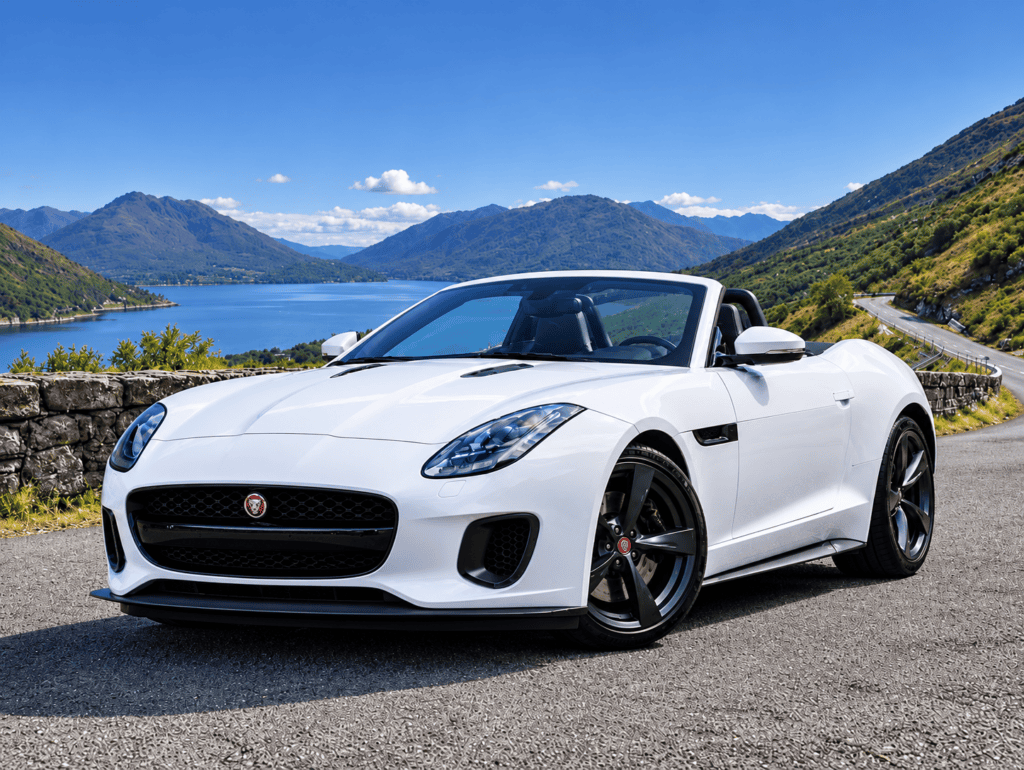
Louise’s F-TYPE 400 SPORT Convertible against a spectacular Alpine backdrop. With 400PS from its supercharged V6, the special model combined distinctive styling with an extra dose of performance.
The V8 R: When Things Became Serious
While the V6 models offered an appealing balance, the F-TYPE V8 R took the experience to another level.
The supercharged 5.0-litre V8 became one of the most important engines in the F-TYPE story. Its performance was impressive, but it was the combination of power delivery and soundtrack that really made it memorable.
The R models brought more aggressive styling, larger wheels, upgraded braking and chassis equipment, together with the sort of performance that made the F-TYPE a serious contender among high-performance sports cars.
Depending on the model year and specification, the V8 R was available in both rear-wheel-drive and all-wheel-drive configurations.
The result was a car that could deliver genuinely formidable acceleration while retaining the character and theatre that had defined the F-TYPE from the beginning.
For many owners, the V8 R represents the essence of the F-TYPE: a dramatic-looking Jaguar with a supercharged engine and a soundtrack that is difficult to forget.
OWNER’S F-TYPE | GARY
Gary’s red F-TYPE V8 R Convertible captures that character particularly well.
The vivid red paintwork, black fabric roof, bonnet vents and substantial alloy wheels give the car a purposeful appearance.
It is exactly the sort of F-TYPE that looks as though it should be heard before it is seen.
With the roof down, the V8 soundtrack becomes an even bigger part of the experience, making the Convertible a particularly appealing way to enjoy Jaguar’s supercharged engine.
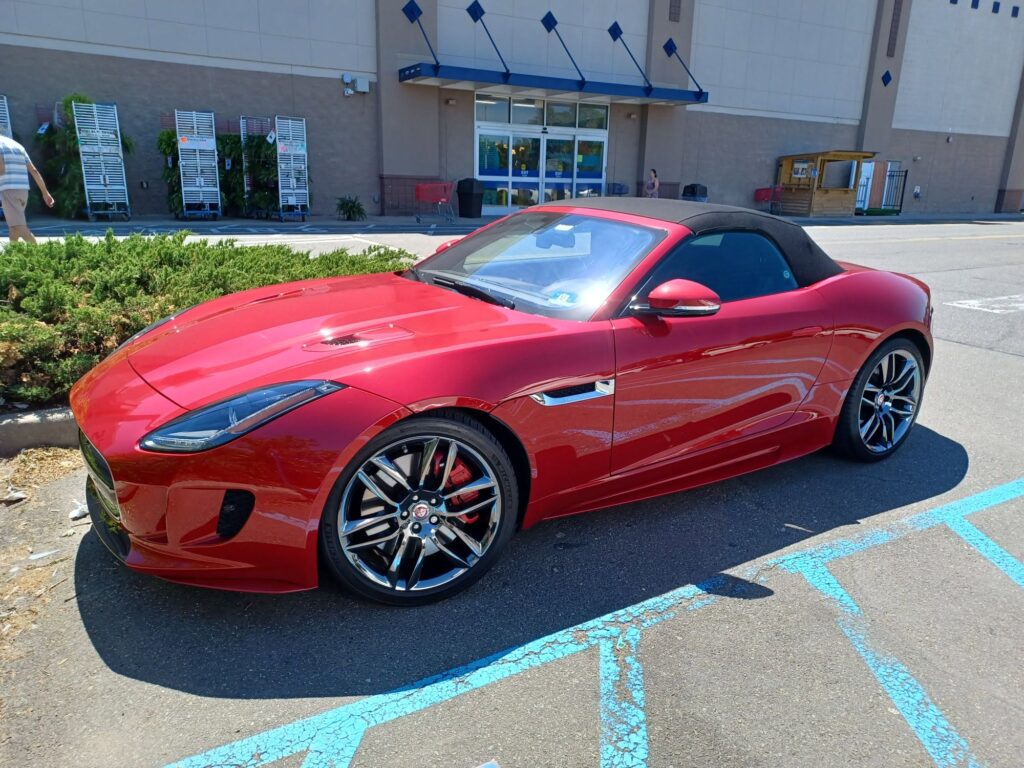
Gary’s F-TYPE V8 R Convertible. The supercharged 5.0-litre V8 brought a new level of performance and drama to the F-TYPE, combining muscular styling with one of Jaguar’s most memorable modern engine soundtracks.
Project 7: The F-TYPE That Became a Legend
If there is one version of the F-TYPE that demonstrates just how far Jaguar was prepared to take its sports car, it is Project 7.
Originally revealed as a concept at the 2013 Goodwood Festival of Speed, Project 7 was inspired by the legendary Jaguar D-Type and the company’s seven outright victories at Le Mans.
The concept attracted enormous attention, and Jaguar subsequently decided to turn it into a production car.
The result was one of the most extraordinary modern Jaguars ever created.
Production was limited to just 250 examples worldwide, with the car developed by Jaguar Land Rover’s Special Operations division.
Powered by a supercharged 5.0-litre V8 producing 575PS and 680Nm of torque, Project 7 was substantially more than a cosmetic special edition.
It featured a distinctive single-seat-inspired design, a shortened windscreen, a prominent rear fairing, carbon-fibre aerodynamic components and bespoke engineering.
The production car did retain two seats, unlike the original concept, but much of its dramatic appearance survived the transition.
Its name celebrated Jaguar’s seven Le Mans victories, and its styling paid tribute to the D-Type’s extraordinary racing heritage.
Project 7 also marked an important moment in the development of Jaguar’s Special Vehicle Operations programme, demonstrating what could be achieved when the company’s designers and engineers were given greater freedom to create something genuinely special.
It remains one of the most distinctive and collectible members of the F-TYPE family.
The SVR: The Ultimate Production F-TYPE
For those who wanted an F-TYPE that combined extreme performance with the practicality of a more conventional production sports car, Jaguar introduced the SVR.
Developed by Special Vehicle Operations, the F-TYPE SVR took the V8 formula and pushed it further.
The supercharged 5.0-litre V8 produced 575PS, with torque reaching 700Nm in the later specification.
The car also received extensive aerodynamic changes, a revised exhaust system, weight-saving measures and chassis enhancements.
All-wheel drive helped put the power down, while the aerodynamic package and revised suspension gave the SVR a more focused character.
Its performance figures were impressive, but the SVR was about more than straight-line speed. It was designed to be a more complete high-performance package, capable of delivering its performance on both road and track.
It was available as both a Coupé and Convertible, giving buyers the option of a more focused fixed-roof car or an open-top version of Jaguar’s most powerful regular-production F-TYPE.
OWNER’S F-TYPE | JAMIE
Jamie’s blue F-TYPE SVR Coupé illustrates the more aggressive side of the range.
The side profile highlights the SVR’s distinctive bodywork, while the dark alloy wheels and red brake callipers give it an appropriately purposeful appearance.
Compared with the earlier V6 models, the SVR looks considerably more muscular, reflecting the additional engineering and performance that went into its development.
It is a fitting example of how far the F-TYPE had evolved from its original launch.
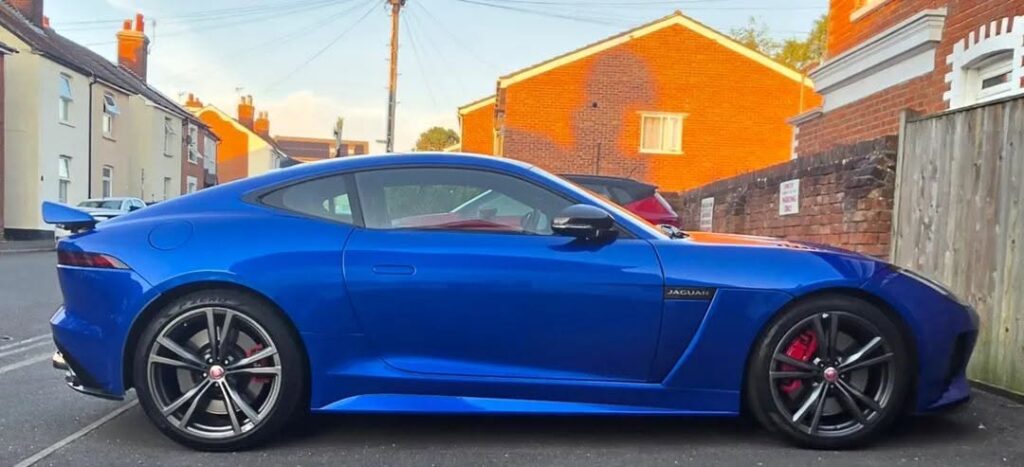
Jamie’s F-TYPE SVR Coupé. Developed by Jaguar’s Special Vehicle Operations division, the SVR represented one of the most focused and powerful production versions of the F-TYPE, combining 575PS with all-wheel-drive performance.
Celebrating the Final Years: F-TYPE 75 and R 75
As Jaguar approached the end of F-TYPE production, the company began to recognise the importance of the car’s 75-year sports-car heritage.
The F-TYPE 75 and R 75 editions were introduced as part of this celebration, marking 75 years since the launch of the XK120 in 1948.
These models received distinctive badging, carefully selected styling details and additional equipment.
The F-TYPE 75 was available with a choice of engine specifications depending on the market, while the R 75 represented the more powerful supercharged V8 version.
The R 75 delivered 575PS and 700Nm of torque, with all-wheel drive helping to translate that performance into impressive acceleration.
The special editions were a fitting way to acknowledge the F-TYPE’s place in Jaguar history, linking the modern sports car with the company’s long tradition of two-seat performance models.
They also provided a reminder that the F-TYPE was not simply a replacement for the E-Type. It had become an important model in its own right.
ZP Edition: A Final Nod to Jaguar’s Racing Heritage
Another important limited-production model was the F-TYPE ZP Edition.
Announced in 2023, the ZP Edition was created to commemorate the end of Jaguar’s internal-combustion sports-car lineage.
Just 150 examples were planned worldwide, with the model inspired by two historic racing E-Types associated with Jaguar’s early 1960s Project ZP programme.
Available in Oulton Blue or Crystal Grey, the ZP Edition featured distinctive racing-inspired detailing, including hand-painted door roundels, bespoke interior finishes and exclusive badging.
Underneath, it retained the supercharged 5.0-litre V8, producing 575PS and 700Nm of torque.
It was a particularly appropriate final special edition, bringing the F-TYPE’s story full circle by connecting Jaguar’s modern sports car with the racing heritage that had helped define the company for generations.
The End of Production: 2024
After more than a decade, the F-TYPE’s production story came to an end in 2024.
The final cars left Jaguar’s Castle Bromwich facility, bringing an end to a production run that had seen a remarkable variety of engines, body styles and special editions.
According to Jaguar, a total of 87,731 F-TYPEs were produced.
The final Convertible was finished in Giola Green, with a black fabric roof and Tan Windsor leather interior. The specification deliberately echoed the final E-Type Convertible built in 1974.
The last F-TYPE was destined for the Jaguar Daimler Heritage Trust collection, where it would join other significant cars from the company’s history.
There was something particularly fitting about the timing.
The final F-TYPE was completed 50 years after the last E-Type had left the production line, creating a direct link between two of Jaguar’s most important sports cars.
The F-TYPE had arrived as a modern interpretation of the classic Jaguar two-seat sports car. It departed having created its own place in that history.
A Range That Offered Something for Everyone
Looking back at the F-TYPE range, one of its greatest strengths was its variety.
The four-cylinder cars brought the styling and experience to a wider audience.
The supercharged V6 models offered an appealing balance of performance and usability.
The 400 SPORT added a distinctive sporting character to the V6 range.
The V8 R and SVR models delivered the performance and soundtrack that many enthusiasts associate most closely with the F-TYPE.
And then there were the special editions: Project 7, the 75, R 75 and ZP Edition, each adding something different to the story.
Few modern sports cars have managed to offer such a broad range of personalities while retaining such a recognisable identity.
More Than Just a Sports Car
Perhaps the most important thing about the F-TYPE is that it was never defined entirely by its specification sheet.
It was about the long bonnet stretching ahead of the driver.
The feeling of sitting low in the cabin.
The sound of the engine starting.
The ability to drop the roof and enjoy an open road.
And, above all, the way it made an ordinary journey feel like something worth remembering.
The photographs shared by Mike, Louise, Brian, Gary and Jamie demonstrate that variety particularly well.
Their cars represent different engines, different specifications and different ways of enjoying the F-TYPE. From Mike’s four-cylinder Convertible to Louise’s 400 SPORT, Brian’s V6 road-trip car, Gary’s V8 R and Jamie’s SVR Coupé, each represents a different chapter in the model’s evolution.
But they all share the same fundamental appeal.
The F-TYPE was designed to make driving feel special.
And that is perhaps the most important part of its legacy.
Jaguar may have stopped building the F-TYPE, but the cars are still out on the roads, being enjoyed by owners around the world.
The final production line may have fallen silent, but the story of the F-TYPE is far from over.
87,731 cars produced. More than a decade of performance. One unmistakable Jaguar.