From Le Mans Legend to Modern Icon: The Story of Jaguar’s D-Type, E-Type and F-Type
Few car manufacturers can claim a sports-car heritage quite like Jaguar.
From the brutal, aerodynamic efficiency of the D-Type to the breathtaking beauty of the E-Type, and finally to the muscular, modern F-Type, Jaguar has spent decades creating cars that combine performance, technology and unmistakably British style.
The three cars tell a fascinating story. The D-Type established Jaguar as a force in international motorsport. The E-Type transformed that racing DNA into one of the most celebrated road cars ever built. And decades later, the F-Type brought the two-seat Jaguar sports car back to life.
With F-Type production now finished, the story has reached another important milestone. The final F-Type represents the end of Jaguar’s traditional two-seat sports-car era — a remarkable chapter that began with the company’s racing ambitions in the 1950s.
The Jaguar D-Type: Born to Win Le Mans
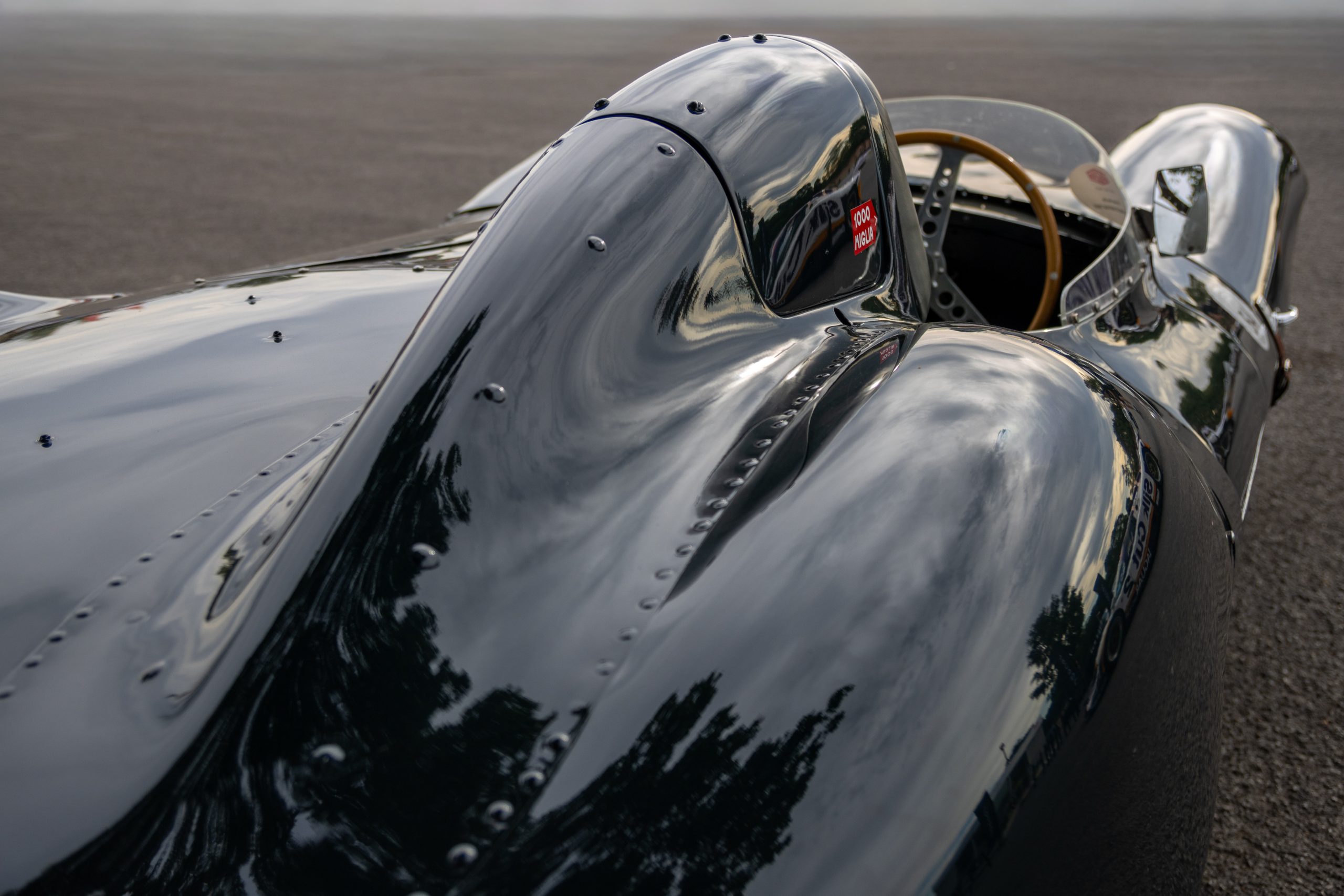
The story begins with the Jaguar D-Type, a car designed with a very specific purpose: to win the 24 Hours of Le Mans.
Introduced in the mid-1950s, the D-Type was the successor to Jaguar’s successful C-Type racing car. But while the C-Type had already established Jaguar’s reputation at Le Mans, the D-Type took the concept of the endurance racer considerably further.
Jaguar engineers, working alongside aerodynamicist Malcolm Sayer, created a car that looked unlike almost anything else on the road or circuit at the time.
Its long bonnet, low bodywork and distinctive vertical tail fin weren’t simply styling exercises. They were the result of an obsession with reducing aerodynamic drag and improving high-speed stability.
The D-Type also featured innovative monocoque construction, borrowing ideas from the world of aviation. Instead of relying entirely on a conventional separate chassis, the car’s body structure formed a major part of its strength.
Underneath the dramatic bodywork was Jaguar’s legendary XK straight-six engine. Initially displacing 3.4 litres, the engine would later grow to 3.8 litres.
But the D-Type wasn’t created to win beauty contests.
It was created to win races.
And win it did.
Three consecutive Le Mans victories
The D-Type achieved three consecutive victories at the 24 Hours of Le Mans in 1955, 1956 and 1957.
That record cemented Jaguar’s place among the great names of international motorsport. Jaguar itself describes the D-Type as having been conceived with the objective of winning Le Mans — a mission that was fulfilled with those three consecutive victories. (Jaguar)
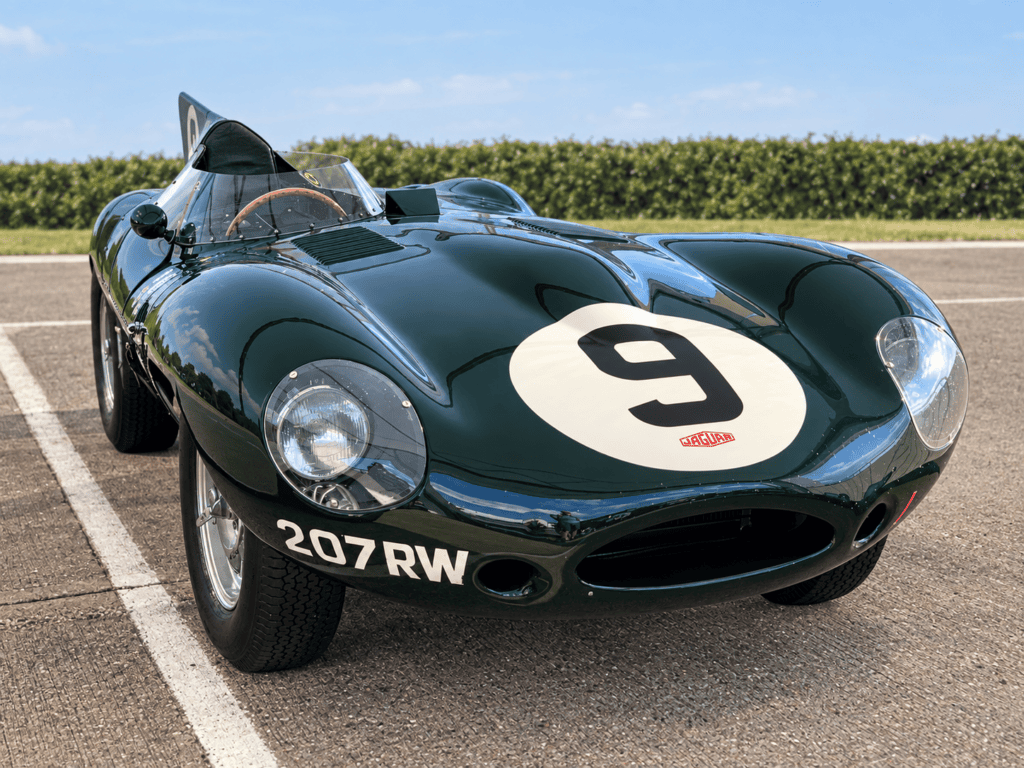
The 1957 victory was particularly significant. Jaguar dominated the event, with D-Types taking the first, second, third, fourth and sixth positions.
The D-Type therefore became much more than another successful racing car. It became the foundation for an entirely new generation of Jaguar sports cars.
And that brings us to perhaps the most famous Jaguar of them all.
From the racetrack to the road: the Jaguar E-Type
When Jaguar unveiled the E-Type in 1961, the world was not quite prepared for it.
The car was beautiful, but there was considerably more to it than good looks.
The E-Type was heavily influenced by Jaguar’s competition cars, particularly the D-Type. Malcolm Sayer’s aerodynamic thinking was carried over into a body that was long, low and remarkably elegant.
The result was a sports car that looked as though it belonged on a racetrack but was designed for the road.
Jaguar famously launched the E-Type at the 1961 Geneva Motor Show. Two cars were used for the launch, including the famous ‘9600 HP’ coupé and ‘77 RW’ roadster. Such was the interest surrounding the car that Jaguar executive Bob Berry drove the only available press-test E-Type from Coventry to Geneva at extraordinary speed, arriving just 20 minutes before the unveiling. Jaguar later described the event as one that created enormous passion and British pride. (Jaguar)
The E-Type immediately became an international sensation.
Its long bonnet, covered headlights, flowing rear bodywork and low driving position gave it an appearance that remains instantly recognisable more than six decades later.
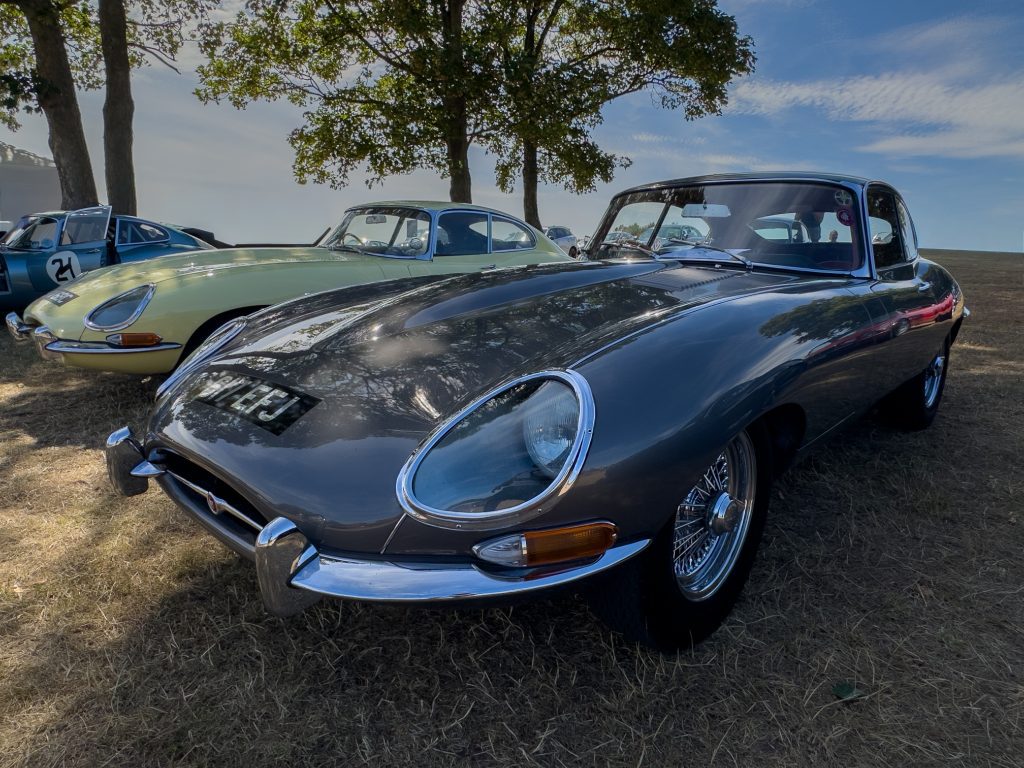
But beneath that beautiful exterior was serious engineering.
The E-Type used a version of Jaguar’s XK straight-six engine and incorporated advanced suspension and braking technology for its time. Later versions would receive larger engines, culminating in the Series III and its 5.3-litre V12.
It was fast, too.
The combination of relatively low weight, aerodynamic bodywork and powerful engines made the E-Type a genuine performance car rather than simply a luxury grand tourer.
The car that became a design icon
The E-Type’s reputation eventually grew far beyond the automotive world.
It became a symbol of 1960s Britain — glamorous, fast and effortlessly stylish.
It attracted celebrities, appeared in films and became one of the defining sports cars of its generation.
Jaguar ultimately produced 72,528 E-Types, with production ending in 1974. (Jaguar Media Centre)
The final E-Type marked the end of an era.
But Jaguar’s sports-car story wasn’t over.
It would simply take a very long time for the next chapter to arrive.
The long wait for another two-seat Jaguar
After the E-Type finished production, Jaguar’s sporting ambitions continued through cars such as the XJ-S and later models, but the company no longer had a direct successor to the classic two-seat E-Type.
For almost four decades, Jaguar enthusiasts waited.
Then, in the early 2010s, the company finally revealed the answer.
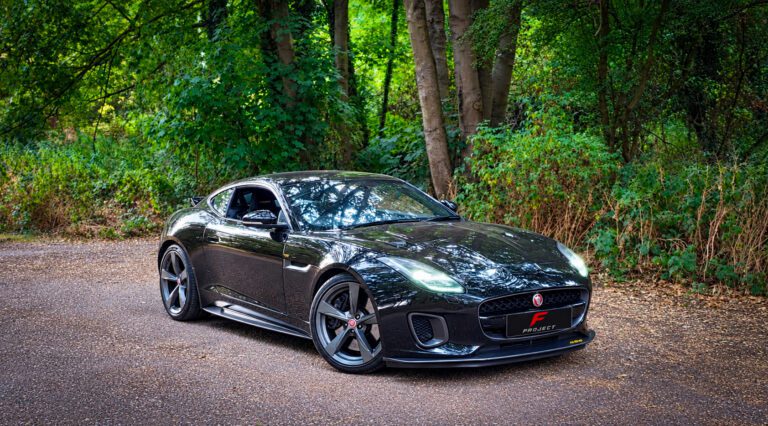
The Jaguar F-Type.
The Jaguar F-Type: bringing the sports car back
The F-Type was unveiled as a convertible in 2012 before going on sale in 2013.
It was hugely significant for Jaguar because it marked the company’s return to the two-seat sports-car market after almost 40 years.
The design was created under Jaguar design director Ian Callum, who was tasked with creating a modern sports car that still felt unmistakably like a Jaguar.
The Ferrari connection
There is another fascinating thread running through the F-Type story — and it leads to Ferrari.
Ian Callum has spoken about his admiration for the Ferrari 250 SWB, describing the car as “intoxicating.”
That is an interesting connection in itself.
The Ferrari 250 SWB and the Jaguar E-Type represent very different approaches to the sports car, yet both became defining designs of their respective eras.
And it brings us back to one of the most famous stories surrounding the E-Type.
Enzo Ferrari is widely quoted as describing the Jaguar E-Type as “the most beautiful car ever produced.”
Whether every retelling of the story is completely accurate or not, the quote has become firmly embedded in the mythology surrounding Jaguar’s most famous sports car.
Which raises an intriguing question:
What would Enzo Ferrari have made of the F-Type?
We can’t know.
But it is a fascinating question to ask, particularly when the man responsible for creating the F-Type had such admiration for one of Ferrari’s greatest designs.
The F-Type was never intended simply to recreate the E-Type.
And perhaps that was the right decision.
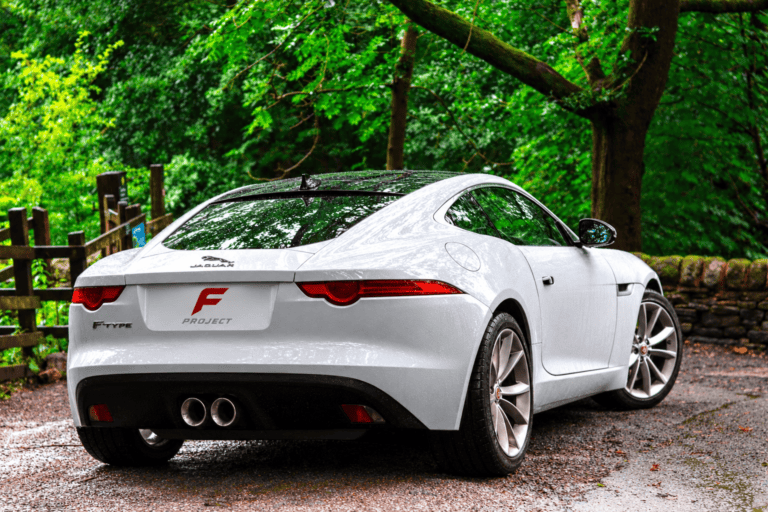
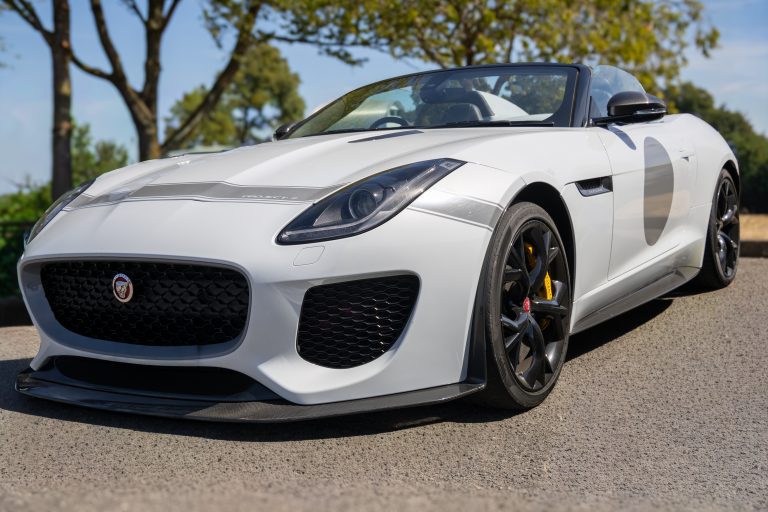
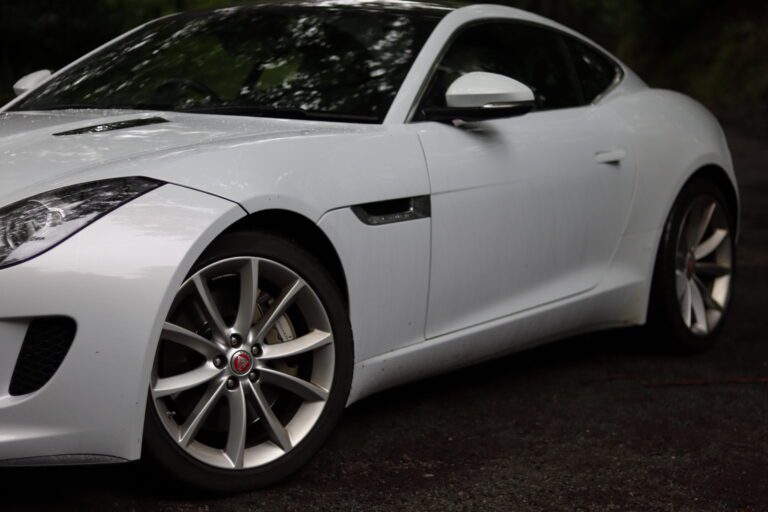
Ian Callum created a modern Jaguar sports car with its own character — lower, wider and more muscular, with a very different interpretation of what a two-seat Jaguar could be.
The E-Type had been elegant and flowing.
The F-Type was more aggressive.
The E-Type looked like a piece of sculpture.
The F-Type looked ready to move.
Yet both shared something fundamental: they were designed to make people stop and look.
And, more importantly, to make people want to drive it.
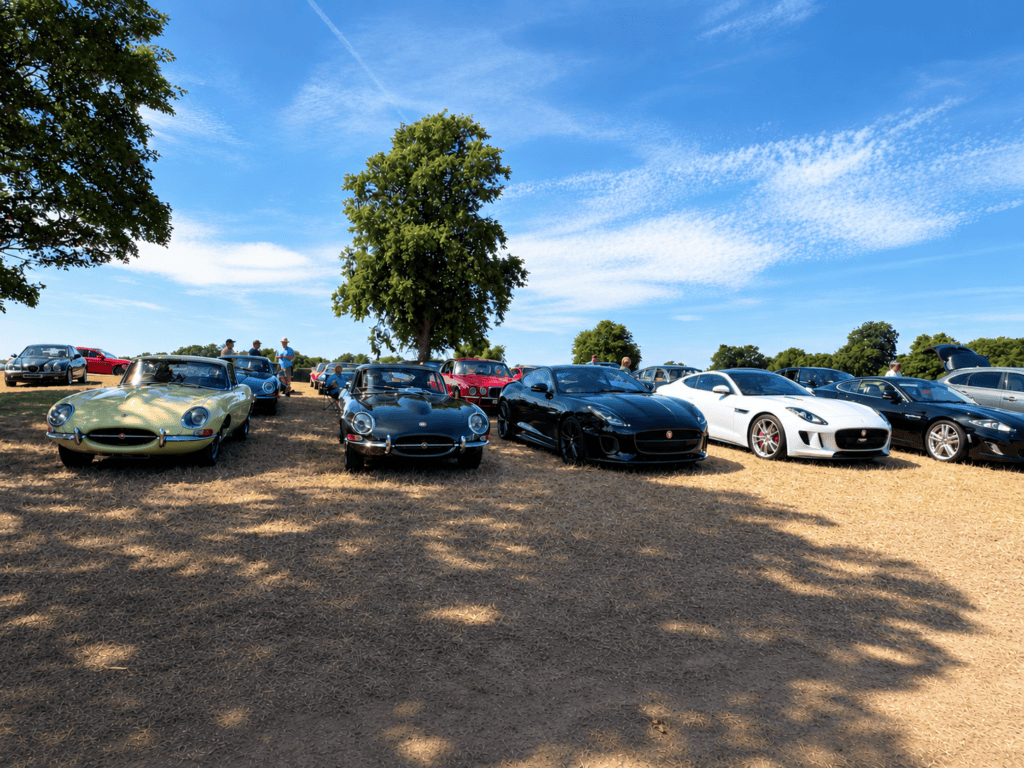
A modern Jaguar with a classic mission
The F-Type wasn’t simply an attempt to recreate the E-Type.
That would have been almost impossible.
Instead, Jaguar took the spirit of its earlier sports cars and translated it into a 21st-century machine.
The F-Type was designed to be beautiful, fast and entertaining — qualities that had made the D-Type and E-Type so memorable.
In that sense, the Ferrari connection becomes even more interesting.
The point was never to build another E-Type.
It was to create the next Jaguar sports car.
And that meant giving the F-Type an identity of its own.
The car was also recognised for its design almost immediately.
In 2013, the F-Type was named World Car Design of the Year, with Jaguar’s Ian Callum describing the project as a particularly important design achievement.
A coupé joined the range in 2014, giving buyers the choice between the open-top roadster and a more practical fixed-roof version.
Over the following decade, Jaguar continually updated the F-Type, offering increasingly powerful versions and eventually creating some particularly desirable V8 models.
With a loud exhaust note and huge reserves of power, the F-Type could deliver the kind of theatrical driving experience that had become increasingly rare in the modern sports-car market.
The final F-Type
Every great story eventually reaches its final chapter.
For the F-Type, that moment came in 2024.
The final F-Type was produced at Jaguar’s Castle Bromwich plant, bringing an end to production of Jaguar’s traditional two-seat sports car.
The significance of the moment was not lost on Jaguar.
The final F-Type was completed almost exactly 50 years after the last E-Type had left the production line.
Even more fittingly, the final car was a V8 convertible finished in Giola Green with a black roof and tan Windsor leather interior — a specification that echoed the final V12 E-Type built in 1974. (Jaguar Media Centre)
Jaguar produced 87,731 F-Types during its production run. (Jaguar Media Centre)
The final car was destined for the Jaguar Heritage collection, ensuring that one example of the final chapter in Jaguar’s traditional sports-car story would be preserved.
Three cars. One idea.
Look at the D-Type, E-Type and F-Type side by side and they appear to belong to completely different eras.
The D-Type is a purpose-built racing machine.
The E-Type is an elegant 1960s grand tourer and sports car.
The F-Type is a modern performance car packed with contemporary technology.
Yet the philosophy connecting them is remarkably consistent.
D-Type — performance first
The D-Type demonstrated what Jaguar could achieve when engineering, aerodynamics and performance were pushed to their limits.
Its purpose was simple: win.
E-Type — performance with beauty
The E-Type took much of that racing philosophy and turned it into a road-going car.
It proved that a sports car could be technologically sophisticated, incredibly fast and visually stunning.
F-Type — the modern interpretation
The F-Type took those same principles into the 21st century.
It wasn’t trying to become another E-Type. Instead, it became its own Jaguar — aggressive, powerful, dramatic and unmistakably British.
The end of an era
The end of F-Type production is significant because Jaguar’s traditional sports-car story now has a full stop.
The D-Type established the performance DNA.
The E-Type turned that DNA into a global design icon.
The F-Type brought the two-seat Jaguar sports car into the modern era.
And now the F-Type itself has joined the history books.
Jaguar is moving towards a new era centred on electrification and a radically different vision for the brand. The company has said that the final F-Type marks the end of one chapter as it prepares for an all-electric future. (Jaguar Media Centre)
Whether future Jaguar sports cars will ever capture the same combination of sound, beauty and mechanical involvement remains to be seen.
But the legacy of the D-Type, E-Type and F-Type is secure.
Three cars separated by decades.
Three very different interpretations of the Jaguar sports car.
And somewhere in that story sits an intriguing question inspired by a Ferrari legend:
What would Enzo Ferrari have made of the F-Type?
We will never know.
But perhaps the answer matters less than the question itself.
Because the F-Type was never supposed to be another E-Type.
It was Jaguar’s opportunity to create something new.
Something lower.
Something wider.
Something more muscular.
Something unmistakably its own.
The E-Type didn’t need to be repeated.
It needed to be followed.
And the F-Type became Jaguar’s answer.