Will the Jaguar F-Type Become a Future Classic?
There are certain cars that seem destined to become classics almost from the moment they are launched. Others take years before we realise what we had. And then there are those that leave production just as the world is beginning to appreciate them.
The Jaguar F-Type may well be one of those cars.
A few years ago, I was fortunate enough to attend an online event hosted by Bremont, during which the company interviewed Ian Callum — the designer responsible for one of the most significant Jaguars of the modern era. Naturally, the conversation turned to design, engineering and the cars that had shaped his career.
At one point, I posed a question that had been on my mind for some time:
Do you think the Jaguar F-Type will become a future classic?
Callum’s answer was immediate and emphatic.
Yes.
There was no hesitation, no carefully worded qualification. Just a resounding yes.
Of course, there is a slight irony here. Callum himself owns an F-Type, so perhaps he has a vested interest in seeing values rise in years to come. But if anyone is qualified to recognise whether a car has the ingredients of a future classic, surely it is the man who designed it.
And that raises the bigger question: what exactly makes an F-Type a future classic?
The F-Type’s Greatest Asset: It Looks Like a Jaguar
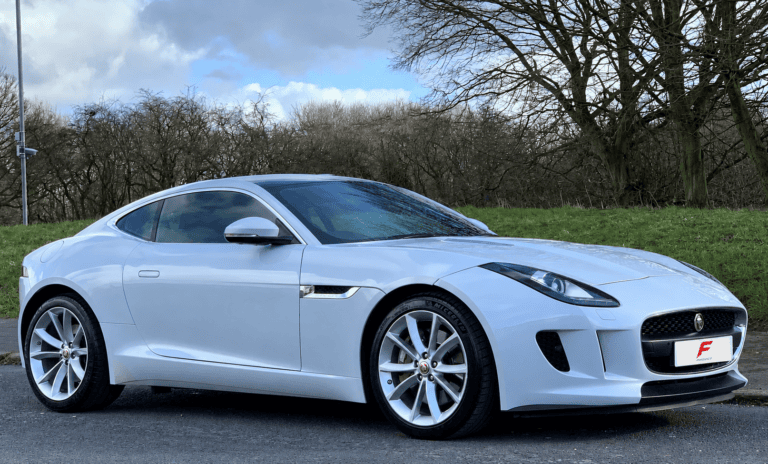
The F-Type arrived in 2013 as the spiritual successor to the legendary E-Type, an association that could easily have become a burden.
The E-Type is one of the most beautiful cars ever produced. Trying to follow it is rather like attempting to paint another Mona Lisa.
Yet Jaguar and Callum didn’t try to recreate the E-Type. Instead, they created something that felt unmistakably Jaguar while being entirely modern.
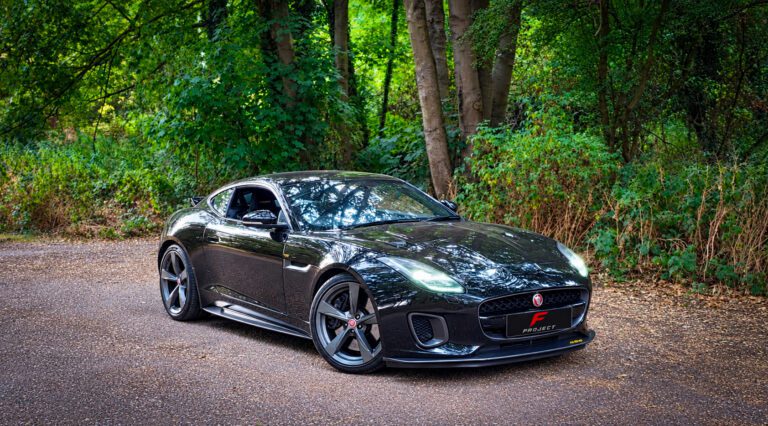
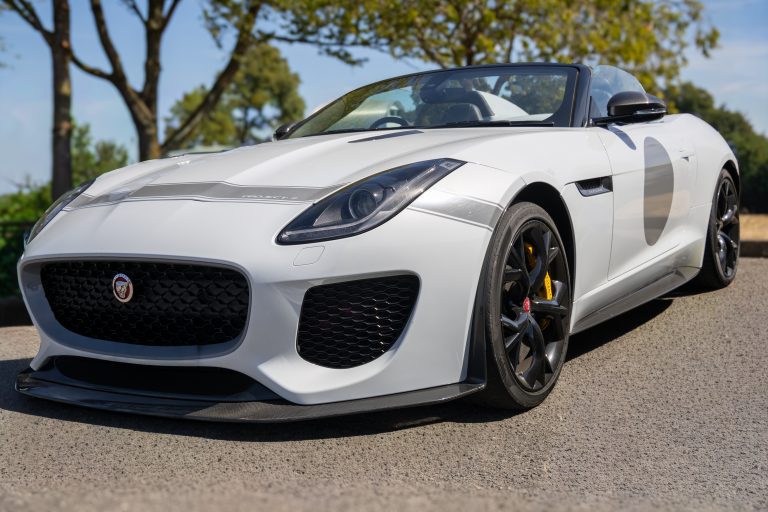
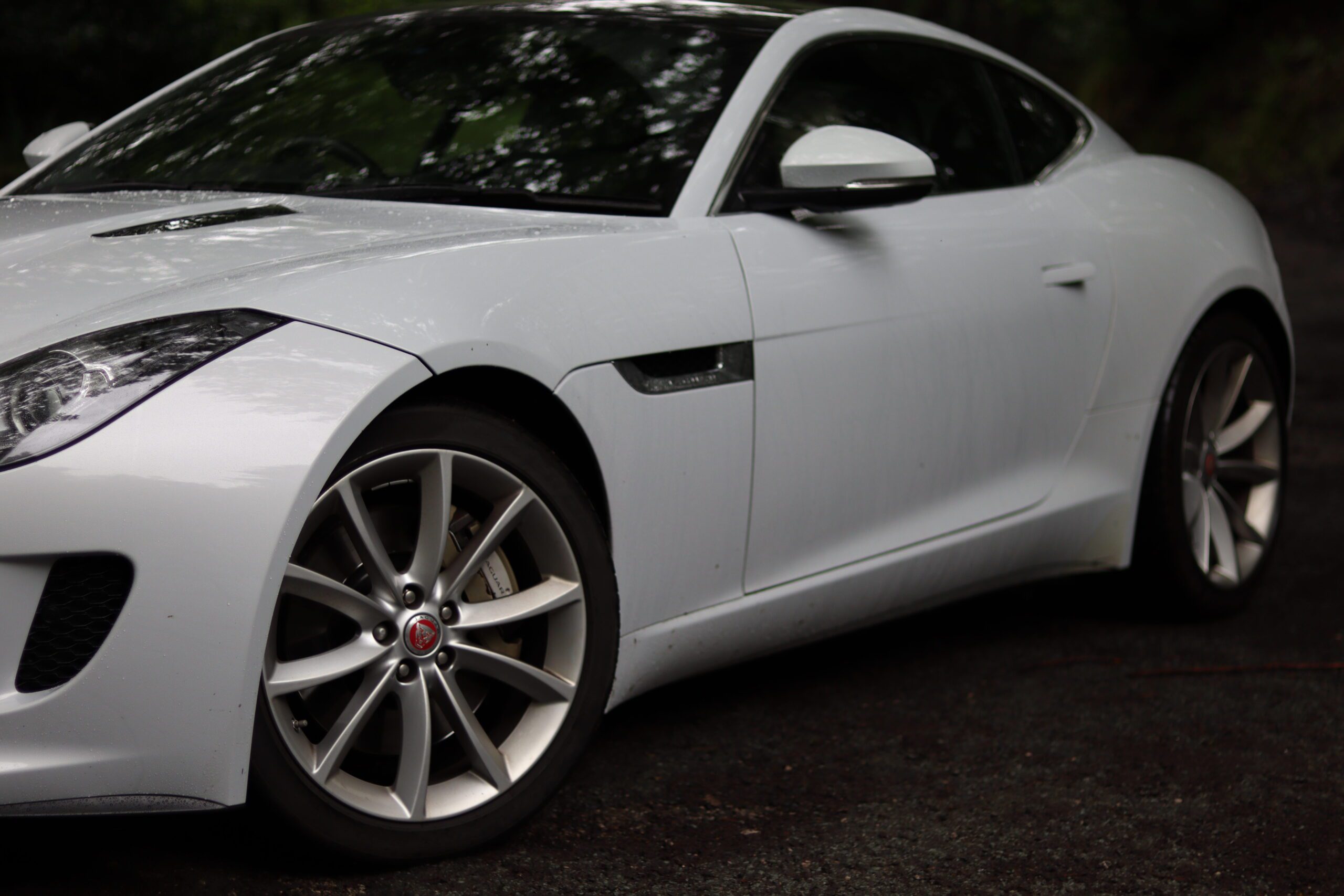
The long bonnet. The low nose. The short rear deck. The wide haunches. The beautifully sculpted bodywork.
It had presence.
And perhaps more importantly, it didn’t look like everything else.
That is increasingly important when considering future classics. In an era of ever more complex aerodynamic surfaces, enormous grilles and increasingly similar design language between manufacturers, the F-Type remains refreshingly individual.
You can see one approaching in the distance and know exactly what it is.
That is a powerful quality.
Then There’s the Noise
Looks alone don’t make a classic.
The F-Type’s other great weapon is something that modern performance cars are rapidly losing: character.
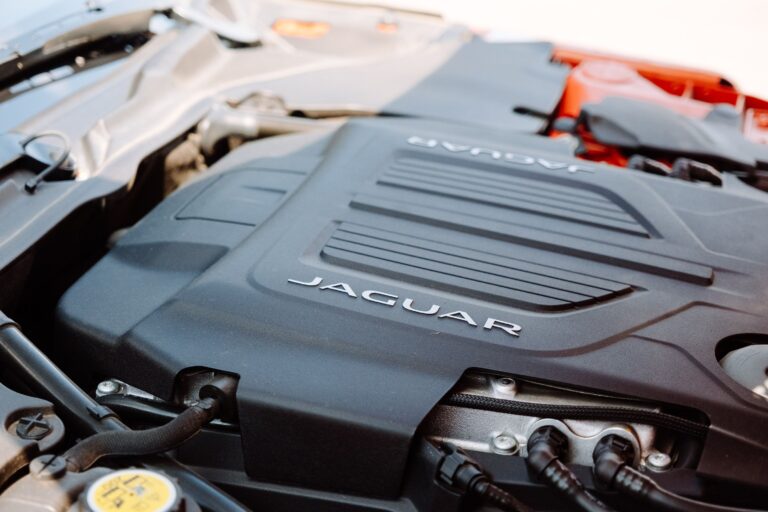
The V6 has a distinctive voice, but it is the supercharged V8 that has become synonymous with the F-Type experience.
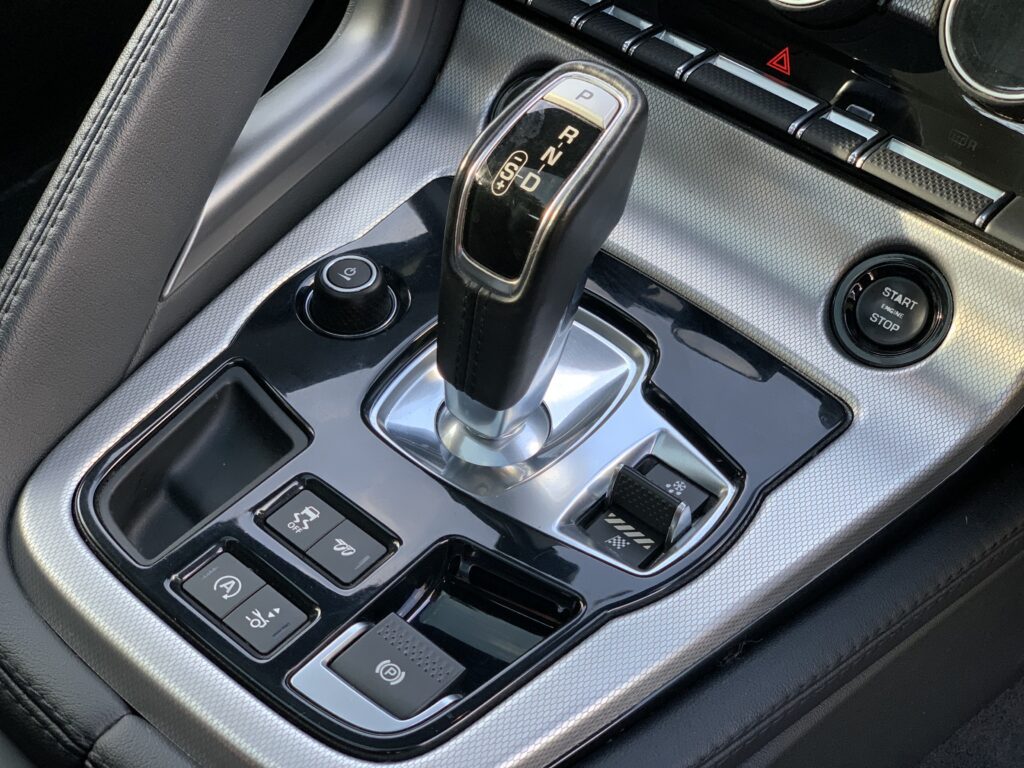
Press the starter and the car doesn’t politely announce that it is ready to go. It makes an event of it.
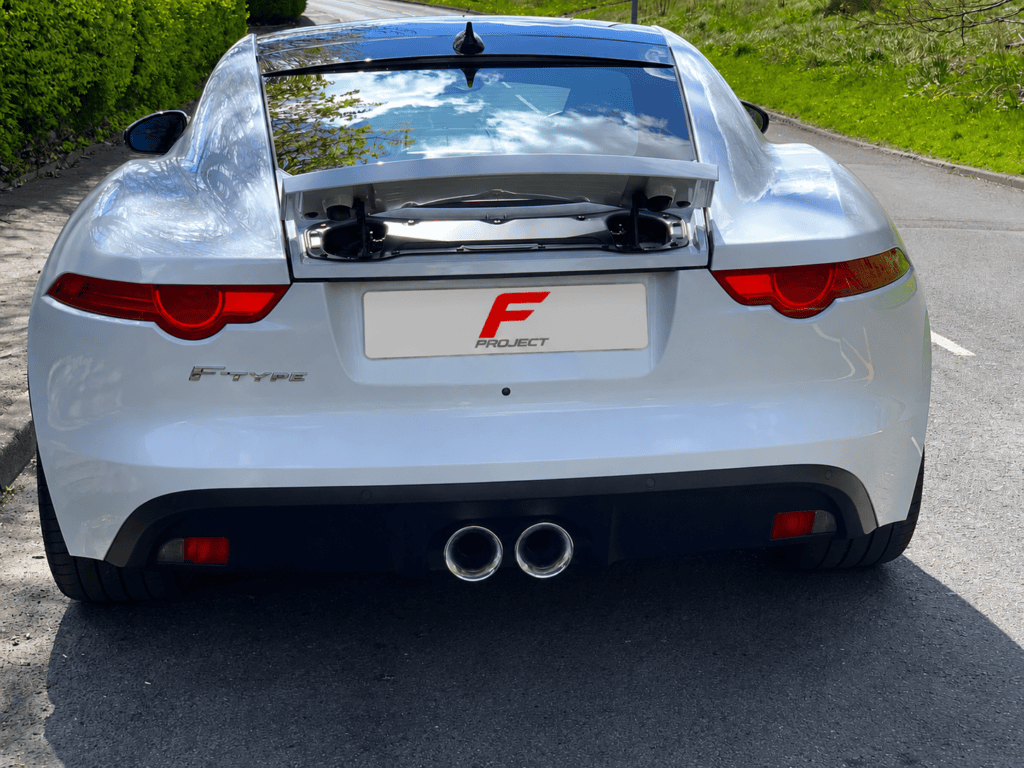
The exhaust crackles. The engine snarls. Under acceleration, the V8 produces the sort of mechanical soundtrack that makes you instinctively wind the window down, even when it is raining.
And therein lies another reason why the F-Type could become increasingly special.
As emissions legislation and electrification continue to reshape the performance-car landscape, the days of large-capacity petrol engines producing enormous amounts of noise and drama are numbered.
What was once commonplace is becoming exotic.
The F-Type represents the end of an era.
The Last of a Breed
Jaguar officially ended F-Type production in 2024, bringing an eleven-year production run to a close.
It was more than simply the end of one model.
It marked the end of Jaguar’s traditional two-seat sports car era.
There is something significant about that.
The automotive industry has moved decisively towards electrification, SUVs and increasingly technology-led vehicles. Jaguar itself has embarked on an extraordinary transformation, with the brand repositioning itself at the luxury end of the market.
Whatever the future holds for Jaguar, the F-Type belongs to a different chapter.
It is one of the last Jaguars designed around the idea that a sports car should primarily make you feel something.
And that matters when we start talking about collectability.
But Which F-Type?
This is where things become interesting.
Not every F-Type is necessarily going to become a valuable collector’s car. Being old is not enough. There are plenty of cars that are old, desirable and still worth relatively little.
Future classics tend to have a combination of design, engineering significance, rarity, provenance and emotional appeal.
The F-Type certainly has some of those ingredients, but specification could prove crucial.
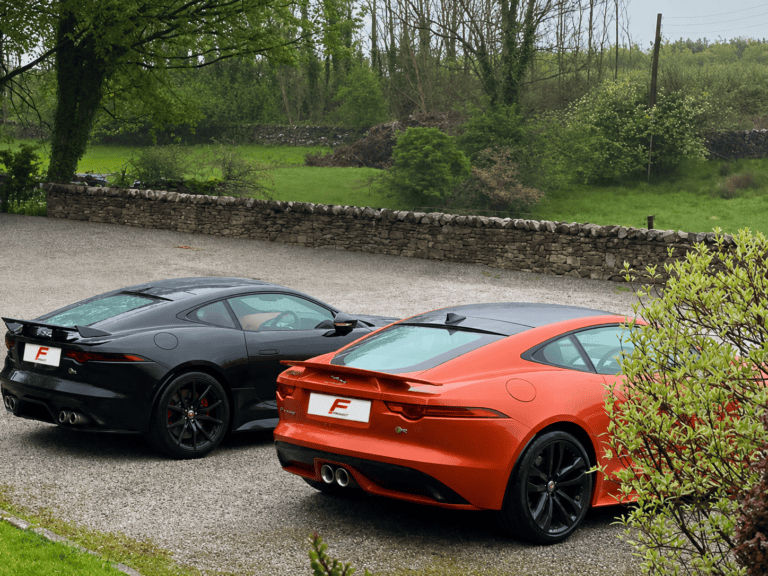
The V8 models will inevitably attract attention. The more powerful variants, particularly those with four-wheel drive and the later R models, have an obvious appeal.
Then there are the limited-production cars.
The Project 7 is particularly fascinating. Created by Jaguar’s Special Vehicle Operations division and inspired by the legendary D-Type, it was limited to just 250 examples worldwide.
That kind of rarity matters.
The later SVR is another interesting proposition, combining the F-Type’s dramatic styling with considerably more performance and a sense of occasion that makes it stand out even within the F-Type family.
But perhaps the most interesting cars of all may ultimately be the ones that best capture what the F-Type was originally intended to be.
Sometimes the simplest specification becomes the most desirable with age.
The Ian Callum Factor
Coming back to that Bremont conversation, I keep thinking about Callum’s answer.
Designers are rarely sentimental about their work in the way owners can be. They move on to the next project, the next challenge, the next blank sheet of paper.
Yet Callum still owns an F-Type.
That tells us something.
The F-Type wasn’t simply another project in his portfolio. It was a car that he clearly connected with personally.
And perhaps that is one of the strongest arguments for its future classic status.
A classic isn’t necessarily defined by its performance figures or its price when new.
It is defined by the way people remember it.
Ask someone who grew up in the 1970s about an E-Type and they will probably remember the shape. Ask someone who grew up in the 1990s about a Ferrari F355 and they will remember the sound. Ask someone who grew up in the 2010s what the F-Type was like and there is a good chance they’ll remember that noise, those looks and the fact that Jaguar still made a proper sports car.
That emotional connection is difficult to manufacture.
The Elephant in the Room: Depreciation
There is, however, an obvious counterargument.
If the F-Type is destined to become a future classic, why can you buy one today for considerably less than its original price?
The answer is simple: being a future classic doesn’t necessarily mean being expensive today.
In fact, depreciation can be part of the journey.
Many future classics spend years in the wilderness. They become affordable used cars, sometimes fall into the hands of enthusiasts, and only later do people begin to recognise their significance.
The F-Type is currently at an interesting point in its life.
It is old enough to be affordable, but new enough to still feel modern. It has already stopped being produced, but hasn’t yet reached the age where the market has collectively decided that it is collectible.
That could make the next few years particularly interesting.
So, Will It Become a Classic?
I think the answer is yes.
Not every F-Type. Not necessarily every engine or specification. And I certainly wouldn’t suggest buying one purely because you expect it to appreciate in value.
But as a piece of automotive history, the F-Type has an extraordinarily strong case.
It has a genuine connection to Jaguar’s sporting heritage. It was designed by one of the industry’s most respected designers. It has an instantly recognisable shape. It offers engines and exhaust notes that are increasingly disappearing from the automotive landscape.
And, crucially, it’s the last Jaguar of its kind.
That counts for something.
Perhaps, in twenty or thirty years, enthusiasts will look back at the F-Type in much the same way that we now look at the cars that once seemed merely used.
They may say: Remember when Jaguar made those?
And then someone will start talking about the V8.
Someone else will talk about the manual.
Another will insist that the Project 7 was the one to have.
And someone, somewhere, will simply smile because they remember driving one.
Maybe that’s what makes a classic.
Not the price.
Not the rarity.
Not even the badge.
The memory.
And when I think back to that Bremont event and Ian Callum’s emphatic answer to my question, I’m inclined to believe he knew exactly what he was talking about.
Although, given that he owns one himself, perhaps we should keep one eye on his motives.
After all, a future classic is always more useful when you’ve already got one sitting in the garage.