Invictus Games Racing: The Jaguar F-Types That Took on British GT
There have been plenty of Jaguar F-Types that have attracted attention over the years.
Some have been spectacular road cars. Others have been limited editions, powerful V8s or beautifully specified convertibles.
But two F-Types were built for a very different purpose. With one as a prototype but never raced
They were built to race.
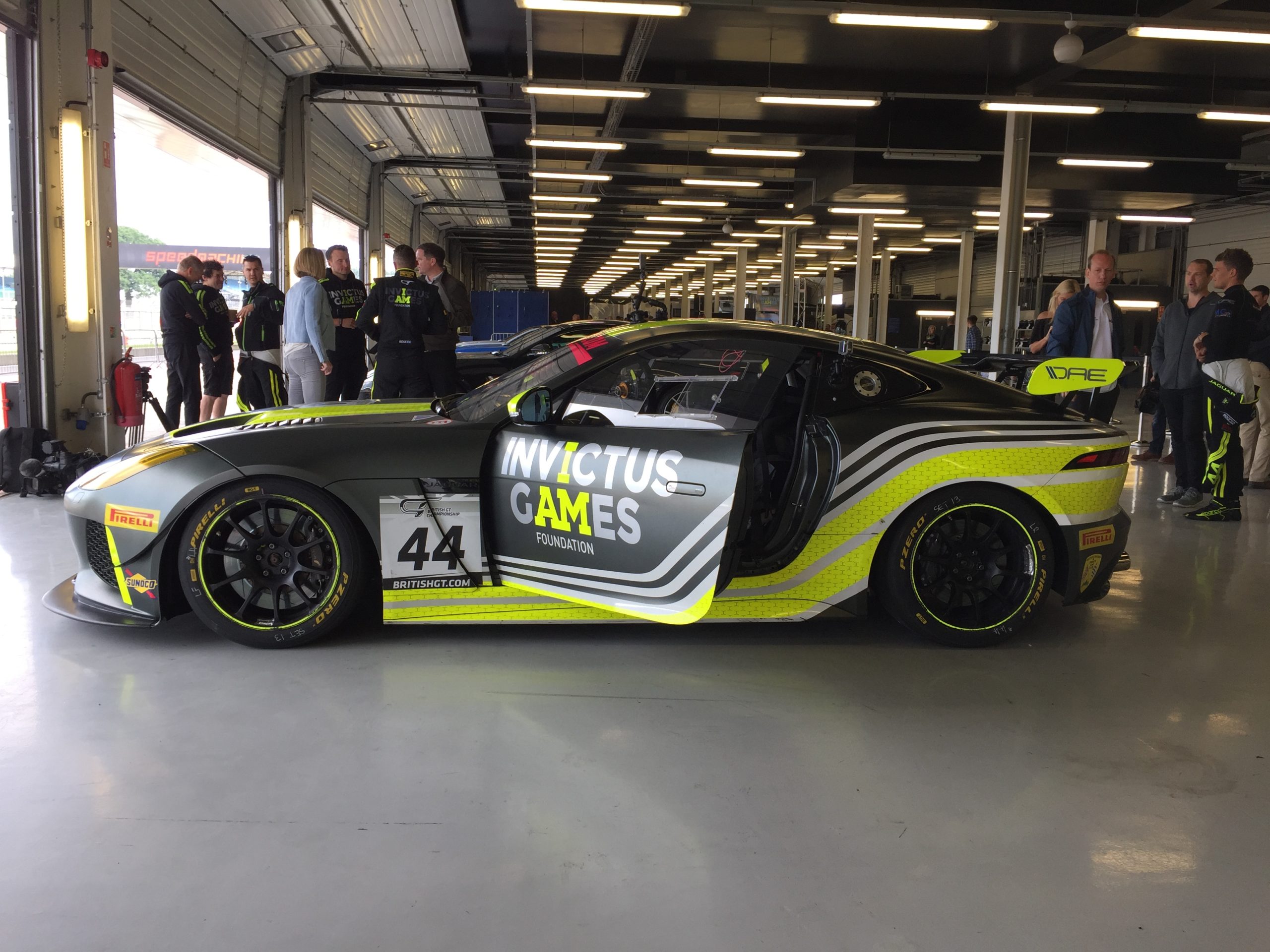
In 2018, two extraordinary Jaguar F-Type SVR GT4s arrived on the British GT Championship grid wearing the colours of Invictus Games Racing.
They were unlike anything else in the championship.
They were also part of a project that went far beyond motorsport.
The two Jaguars had been created specifically to give wounded, injured and sick veterans of the British Armed Forces the opportunity to compete at one of Britain’s highest levels of GT racing.
This was not simply a Jaguar racing programme.
It was a story about competition, rehabilitation, engineering, teamwork and determination — with the F-Type at the centre of it all.
An Unusual Idea
The story began with James Holder, co-founder of Superdry and a racing driver himself.
Holder had competed in British GT and, after watching the Invictus Games in Orlando in 2016, was inspired by the determination of the competitors.
The idea gradually developed into something extraordinary: create a racing team in partnership with the Invictus Games Foundation and give wounded and injured ex-service personnel the opportunity to race in the British GT Championship.
Jaguar was brought into the project, with its Special Vehicle Operations division commissioned to develop two bespoke F-Type SVRs for GT4 competition.
It was an ambitious undertaking.
The F-Type SVR was already Jaguar’s high-performance flagship road car, powered by a 5.0-litre supercharged V8 and capable of 200mph in road-going form.
Now Jaguar was going to transform it into a proper GT4 racing car.
And there wouldn’t be just one.
There would be two.
Jaguar described the cars as bespoke F-Type SVR racing cars developed and built by SVO’s Bespoke division, specifically for the Invictus programme.
The result was two of the most unusual F-Types ever created.
Meet the F-Type SVR GT4
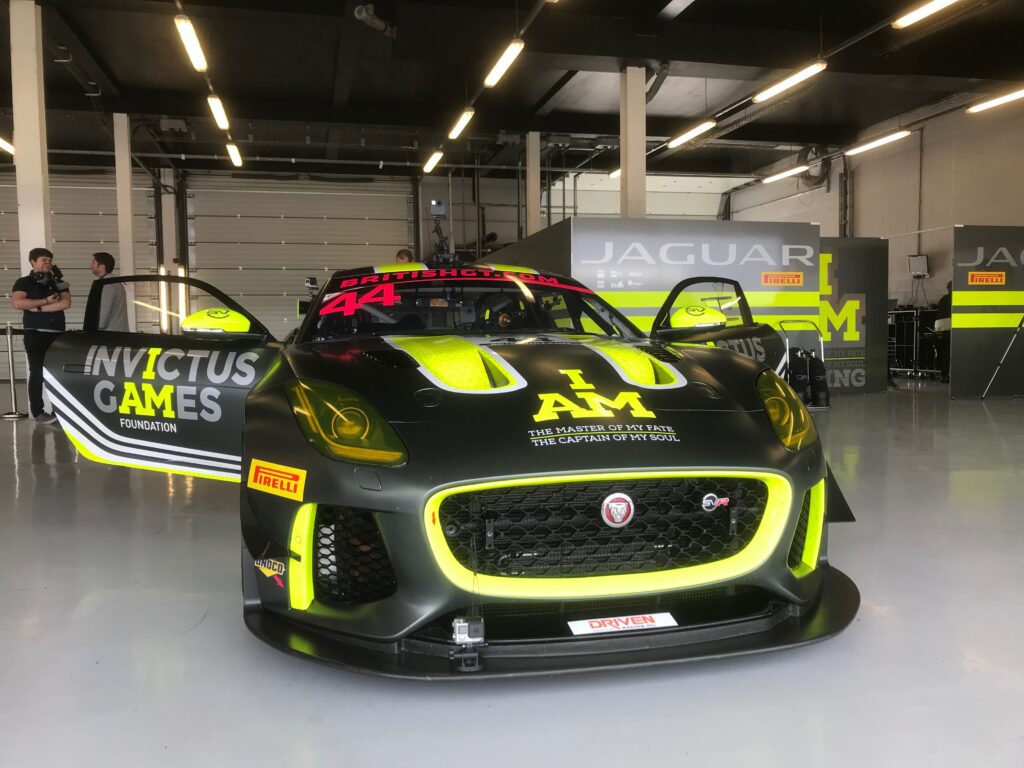
From the outside, the Invictus Jaguars looked every inch the racing car.
The road-going F-Type’s elegant bodywork was transformed with the aerodynamic equipment, race preparation and safety systems required for GT4 competition.
But underneath, the fundamental character of the F-Type remained.
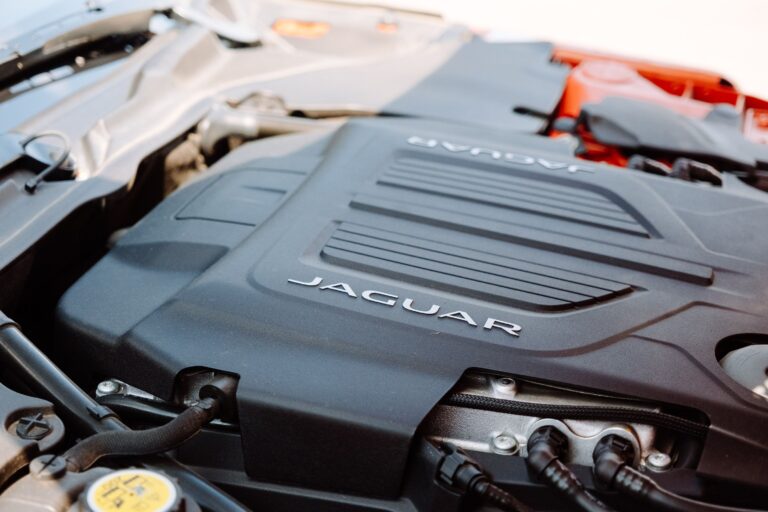
The 5.0-litre supercharged V8 was retained, while the road car’s all-wheel-drive configuration was changed to rear-wheel drive for racing.
That was an important detail.
The F-Type had been transformed from a fast road car into a purpose-built GT racer while retaining the engine that gave the SVR its extraordinary character.
And there was something particularly fitting about that engine being at the heart of the project.
You could take the F-Type away from the road.
You could put it on slick tyres, strip out its luxury interior and turn it into a competition machine.
But you couldn’t remove the character.
The noise was still there.
The shape was still there.
And the unmistakable Jaguar identity was still there.
Racing With a Purpose
The driver line-up was perhaps the most important part of the entire project.
Rather than simply hiring four professional racing drivers, Invictus Games Racing worked with Mission Motorsport to identify wounded, injured and sick service personnel who could take part in the programme.
Four veterans were selected, with each sharing a car alongside a professional driver.
The drivers came from different branches of the Armed Forces, including the Royal Marines, RAF and Parachute Regiment.
Among them was former Royal Marine Major Steve McCulley.
McCulley had suffered catastrophic injuries in Afghanistan after an IED attack in 2011. His injuries ended his military career, and motorsport subsequently became an important part of his rehabilitation.
For him, the F-Type wasn’t simply a racing car.
It represented an opportunity to compete again.
To be part of a team again.
And to experience the adrenaline and camaraderie that had been such a significant part of military life.
Another of the selected drivers was Ben Norfolk, an RAF Sergeant, while Paul Vice and Basil Rawlinson were also involved in the programme.
Professional drivers were there to provide experience and support, but the project deliberately put the veteran drivers at its heart.
That made Invictus different from almost every other team in the paddock.
Two Jaguars. One Mission.
The 2018 British GT season saw both F-Types entered into the GT4 category.
The cars were officially listed as the #44 and #22 entries, with drivers including Steve McCulley, Matthew George, Ben Norfolk and Jason Wolfe.
Matthew George was the professional driver working with McCulley, while American racer Jason Wolfe was paired with Ben Norfolk.
The two cars represented something British GT had rarely seen before.
They weren’t simply manufacturer-backed race cars chasing trophies.
They were part of a rehabilitation programme.
And yet, once the visor went down, the stopwatch didn’t care about the story.
The Jaguars still had to race.
They still had to qualify.
They still had to complete pit stops.
And they still had to fight against some very serious competition.
The Reality of British GT
The British GT Championship is an intensely competitive environment.
The F-Type wasn’t entering a demonstration class.
It was competing against established GT4 machinery from manufacturers including Aston Martin, McLaren, BMW, Ford and Mercedes-AMG.
For the Invictus team, 2018 was inevitably a learning experience.
The two Jaguars struggled for outright results during parts of the season, and the official British GT results show just how steep the challenge was.
But finishing positions only tell a small part of the story.
Every lap was experience.
Every pit stop was another lesson.
Every session gave the team more information about the car.
And, perhaps most importantly, the drivers were developing as racing drivers.
The project was never supposed to become an overnight championship-winning operation.
It was about the journey.
And the journey was only beginning.
The F-Type Gets Faster
Behind the scenes, David Appleby Engineering was working to develop the Jaguars.
The F-Type SVR GT4 was still a relatively new car competing against machinery from manufacturers with established GT racing programmes.
For 2019, the team returned with a more focused approach, entering a single F-Type rather than campaigning both cars throughout the championship.
The decision allowed the team to concentrate its resources on extracting more performance from the Jaguar.
And the results began to arrive.
The improvements were significant.
British GT reported that David Appleby Engineering had made major improvements to the F-Type SVR over the winter, transforming it into a car capable of mixing it with the established GT4 competition.
The difference was immediately apparent at Oulton Park.
Oulton Park: The Jaguar Returns to the Podium
Easter Monday, 22 April 2019.
Oulton Park.
The opening round of the British GT Championship.
Steve McCulley and Matthew George were sharing the Invictus Jaguar.
And this time, the F-Type wasn’t just making up the numbers.
The pair produced an extraordinary drive.
Starting from 16th in class, they fought their way forward to finish sixth overall in the GT4 race.
But more importantly, they won the GT4 Pro/Am class.
The result was historic.
It gave Jaguar its first British GT podium since 1997.
Twenty-two years.
That is an extraordinary gap.
The Jaguar had returned to the British GT podium, and it had done so as part of one of the most unusual teams in the championship.
And the day wasn’t finished.
In Race 2, McCulley and George fought their way to another Pro/Am podium, finishing third in class.
Two races.
Two Pro/Am podiums.
The F-Type was now a genuine contender.
A Jaguar That Earned Respect
The significance of Oulton Park went beyond the trophies.
The F-Type had finally demonstrated what it could do when properly developed for GT4 racing.
The car’s pace was no longer simply a novelty.
The Jaguar was competitive.
British GT itself highlighted how far the car had progressed, noting that the winter development work had transformed the F-Type into a machine capable of competing with the established GT4 field.
Suddenly, the big Jaguar V8 was something to be taken seriously.
And for the people behind Invictus Games Racing, the results provided an additional reward.
The veterans weren’t simply participating.
They were competing.
And they were winning.
More Than a Racing Team
This is what makes the Invictus F-Types so fascinating.
You can look at them purely as racing cars.
You can study their aerodynamic modifications, their suspension, their engine and their lap times.
But that only tells half the story.
The other half is the people sitting inside them.
The Invictus project was built around the idea that motorsport could play a role in rehabilitation.
The veterans were able to experience the intensity of competition again, but within a team environment where their abilities mattered.
There was the familiar military sense of teamwork.
Preparation.
Discipline.
Communication.
Trust.
And then there was the racing itself.
The moment the lights went out, everybody had the same objective.
Go faster.
Steve McCulley and Paul Vice
Perhaps one of the most remarkable aspects of the project was the relationship between Steve McCulley and Paul Vice.
Both Royal Marines, both had been injured during the same tour of Afghanistan in 2011.
They became part of Invictus Games Racing from the beginning, but initially raced separately alongside professional driver Matthew George.
By 2019, they were still an important part of the programme.
At the season finale at Donington Park, McCulley and Vice were finally set to share the same Jaguar as an Am/Am pairing.
British GT noted that the two had been part of the Jaguar programme since its first outing two years earlier and that the project remained closely connected to their rehabilitation.
It was a fitting development for a project that had always been about bringing people together.
The World’s Only GT4 Jaguars
There is another reason these cars have become so fascinating to F-Type enthusiasts.
They are exceptionally rare.
David Appleby Engineering built and prepared the cars for Invictus, and British GT described them as the world’s only GT4-specification Jaguars.
That makes the Invictus F-Types a unique part of Jaguar history.
There have been plenty of racing Jaguars.
The C-Type.
The D-Type.
The XJ-S.
The XJ220.
The XKR GT3.
And, later, the I-PACE eTROPHY cars.
But the F-Type SVR GT4 occupies its own particular place in that lineage.
It was a genuine competition car based around Jaguar’s modern sports car.
And it was created for a purpose that went beyond winning races.
The F-Type’s Racing DNA
For a car enthusiast, there is something deeply satisfying about seeing an F-Type on a racing circuit.
The road car was already designed with performance in mind.
The GT4 programme simply took those qualities to another level.
The supercharged V8.
The rear-wheel-drive configuration.
The low, wide stance.
The unmistakable exhaust note.
The F-Type was always a sports car.
The Invictus project proved that it could be a racing car, too.
And perhaps that’s one of the most important parts of its legacy.
Jaguar has a long history of motorsport success, from the D-Type’s Le Mans victories to the XJR-9 and XJR-12, but the Invictus F-Type project gave that heritage a very modern interpretation.
It wasn’t about a factory team spending millions chasing an overall championship.
It was about using a Jaguar sports car to give people another chance to compete.
A Special Chapter in F-Type History
The Invictus F-Types may not have won the British GT Championship.
They may not have dominated the timing screens every weekend.
But measuring their success purely in wins and championships would miss the point.
These were two Jaguars that carried an important message onto the racetrack.
They demonstrated that motorsport can be about more than trophies.
They showed that a racing car can become a tool for rehabilitation.
And they gave the F-Type a chapter in motorsport history that is unlike any other.
When the history of the Jaguar F-Type is eventually written, the Invictus Games Racing cars deserve their own page.
Because while thousands of F-Types were built for roads around the world, only two were created to take on British GT.
Only two became GT4 racers.
And only two carried the Invictus name onto the grid.
The Legacy
The Invictus Games Racing F-Types are now part of Jaguar’s racing history.
Their time in British GT was relatively short, but their story was extraordinary.
A project born from inspiration.
Two bespoke Jaguar F-Type SVR GT4s.
A team of professional racers and wounded veterans.
A huge learning curve.
A transformed racing car.
And eventually, podium success.
The F-Type was created as Jaguar’s modern two-seat sports car.
Invictus Games Racing showed another side of what that car could become.
Not just a road-going performance machine.
Not just a beautiful Jaguar.
But a race car with a purpose.
And perhaps that is why, years after the two Jaguars first appeared on the British GT grid, the Invictus F-Type remains one of the most compelling chapters in the car’s history.
Two Jaguars. One team. One extraordinary story.
And for anyone who loves the F-Type, they are two cars worth remembering.